


Article published: 3/17/26
The Luxurification of Protein
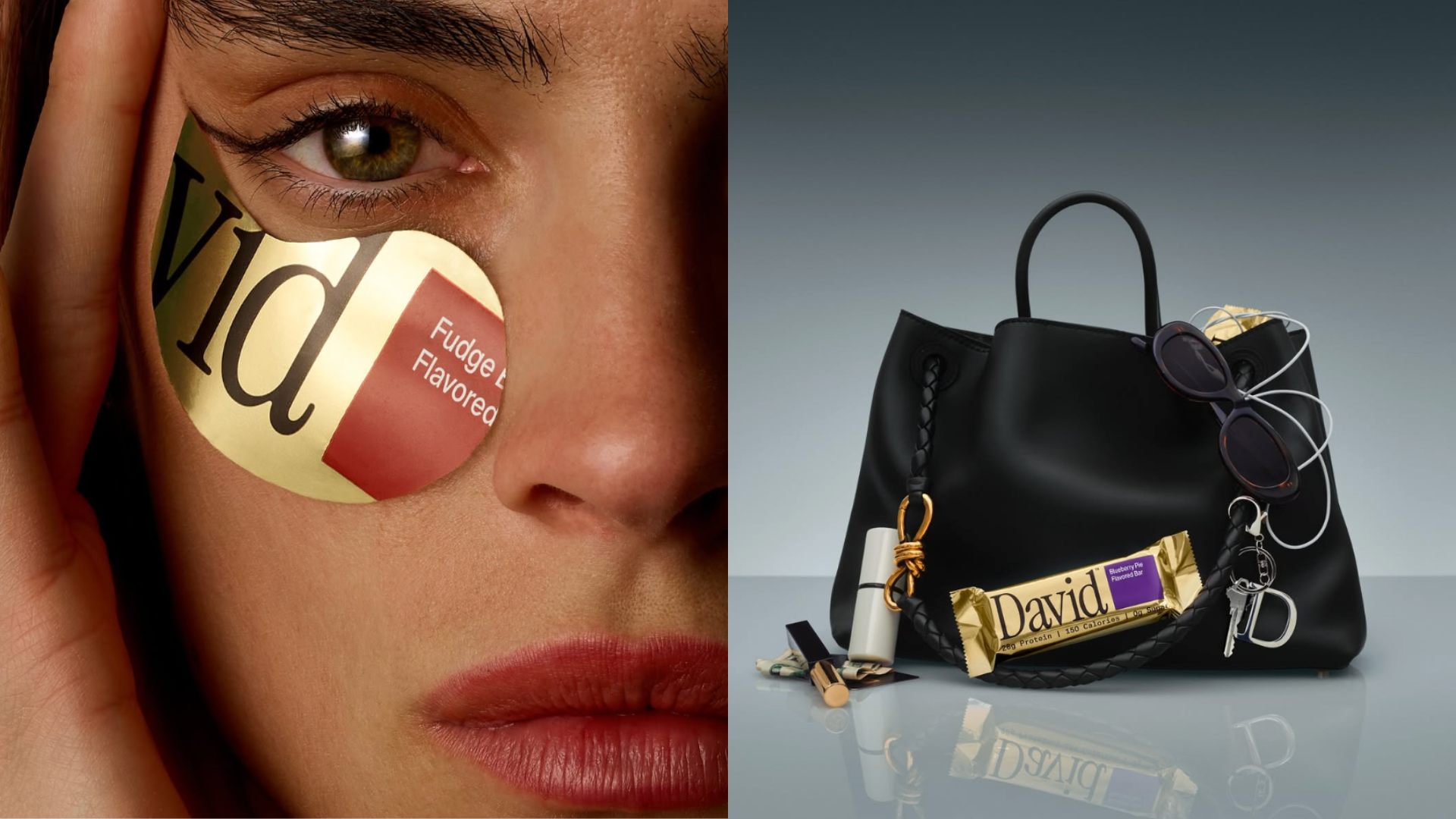
A recent "what's in my bag" video featuring supermodel Candice Swanepoel tells you everything you need to know about where David Protein is headed. Tucked between a paperback and a set of eye patches sits a David protein bar. Just in a bag. Among beauty things.
That's not an accident. It's a strategy.
The Repositioning
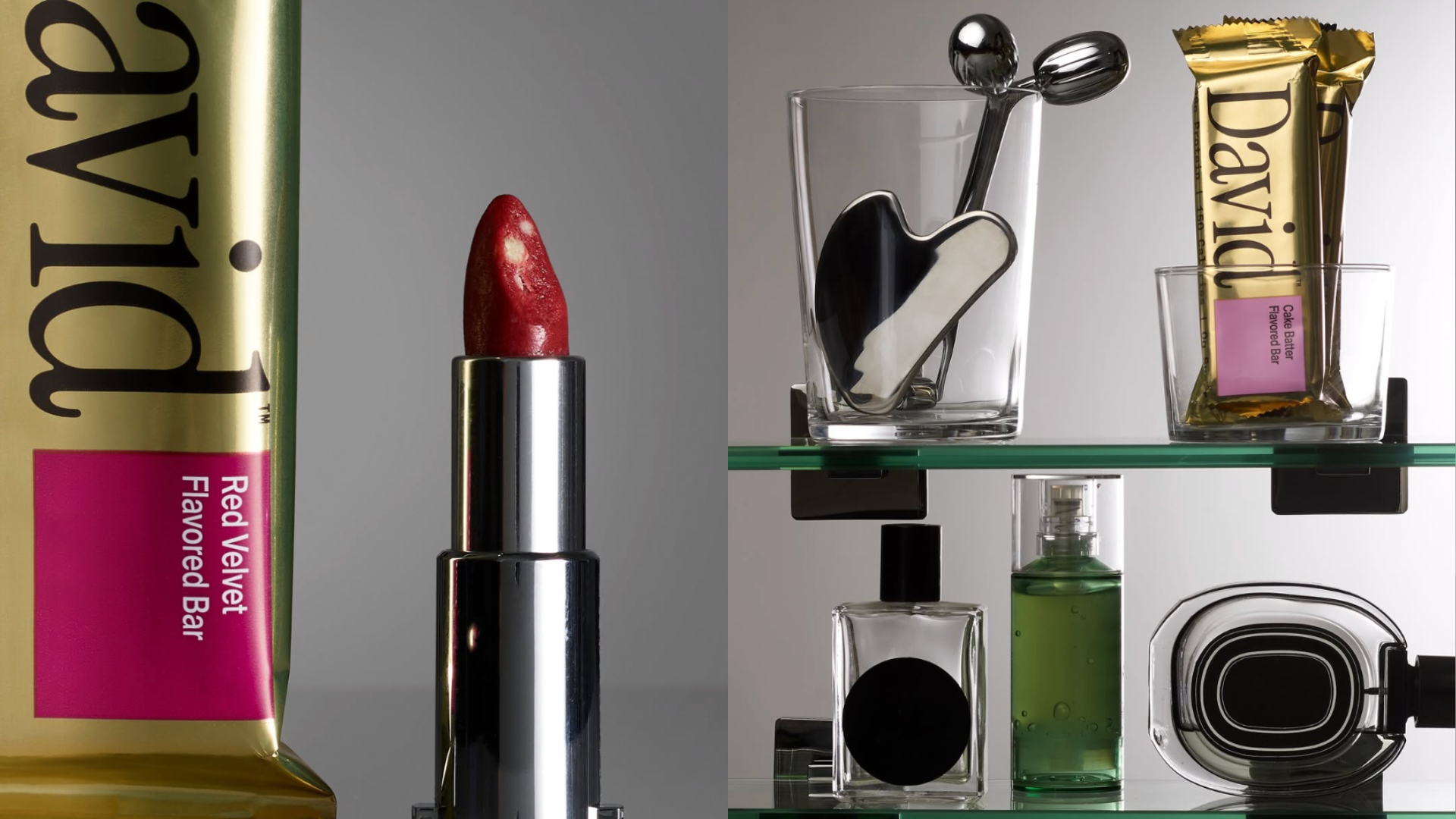
David Protein has been executing one of the more interesting rebranding plays in the food space: a deliberate repositioning away from gym culture and toward something closer to a luxury wellness aesthetic. Where most protein bars live, next to Quest on a gas station shelf or stacked by the register at a supplement store, David wants to exist somewhere else entirely. In the same mental category as a gua sha, a Pilates membership, or a really good eye cream.
The consumer they're courting isn't the bodybuilder. It's the eye-patch-wearing, pilates-going, carefully-consuming woman who thinks about what she puts in her body the same way she thinks about what she puts on her skin.
Protein, in this framing, isn't a supplement. It's a beauty product.
The Creative Direction
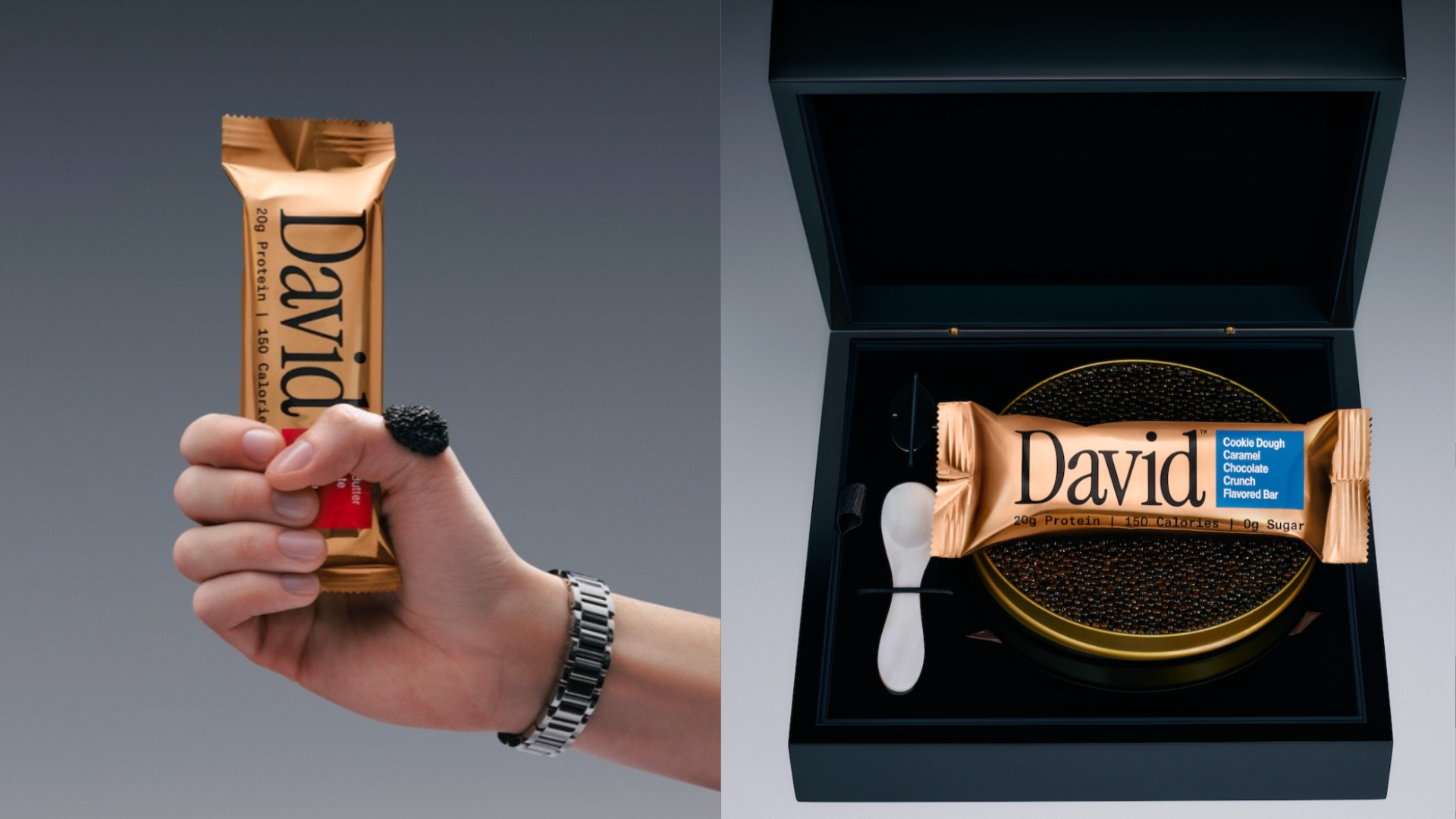 Best way to exemplify luxury? Pair your product with caviar
The brand's creative choices have been studied and deliberate. They've leaned into luxury signaling, most memorably pairing their product with caviar, which is about as direct a "we are not a gas station snack" statement as a brand can make. They appointed Candice Swanepoel as Chief Beauty Officer, a title that would have been absurd for a protein bar company five years ago and now makes perfect sense.
Their ad copy has teeth, too. A recent campaign with Julia Fox used the line"Men disappoint. David satisfies." A pointed challenge to the male-dominated protein narrative that positions the bar as something culturally relevant to women, not just nutritionally convenient.
"This is what models eat" does a lot of work as a positioning statement. It connects the product to aspiration, to fashion, and quietly distances it from the sweaty, functional world of macros and PR totals.
Why It's Working (For Now)
The timing is sharp. Protein snacks are having a genuine cultural moment among groups that have nothing to do with the gym: models, fashion industry people, GLP-1 and Ozempic users managing appetite, and a broader wave of calorie-conscious consumers who are newly protein-aware. David is surfing that wave while most competitors are still talking to a different audience entirely.
Compare the field: Quest sells to the gym. RXBar sells to Whole Foods. Built sells to bodybuilding. David is selling something harder to name. Protein as a fashion accessory. Protein as a wellness ritual. Protein as a status object.
The Risk
There's a version of this that goes wrong.
Campaigns built around supermodels have a complicated track record with real female consumers. The more aspirational and unattainable the imagery, the more some audiences disconnect rather than identify. Brands like Skims and Alo Yoga have worked hard to balance aspirational aesthetics with body diversity because they've seen what happens when the gap gets too wide.
The deeper risk is credibility drift. If the aesthetic starts to feel less like "luxury wellness" and more like "thinness marketing," David could find itself in uncomfortable company alongside diet bars, appetite suppressants, and skinny snacks. That's a very different product than a serious, high-quality protein bar, and it's a hard reputation to shake once it sets.
The Bet
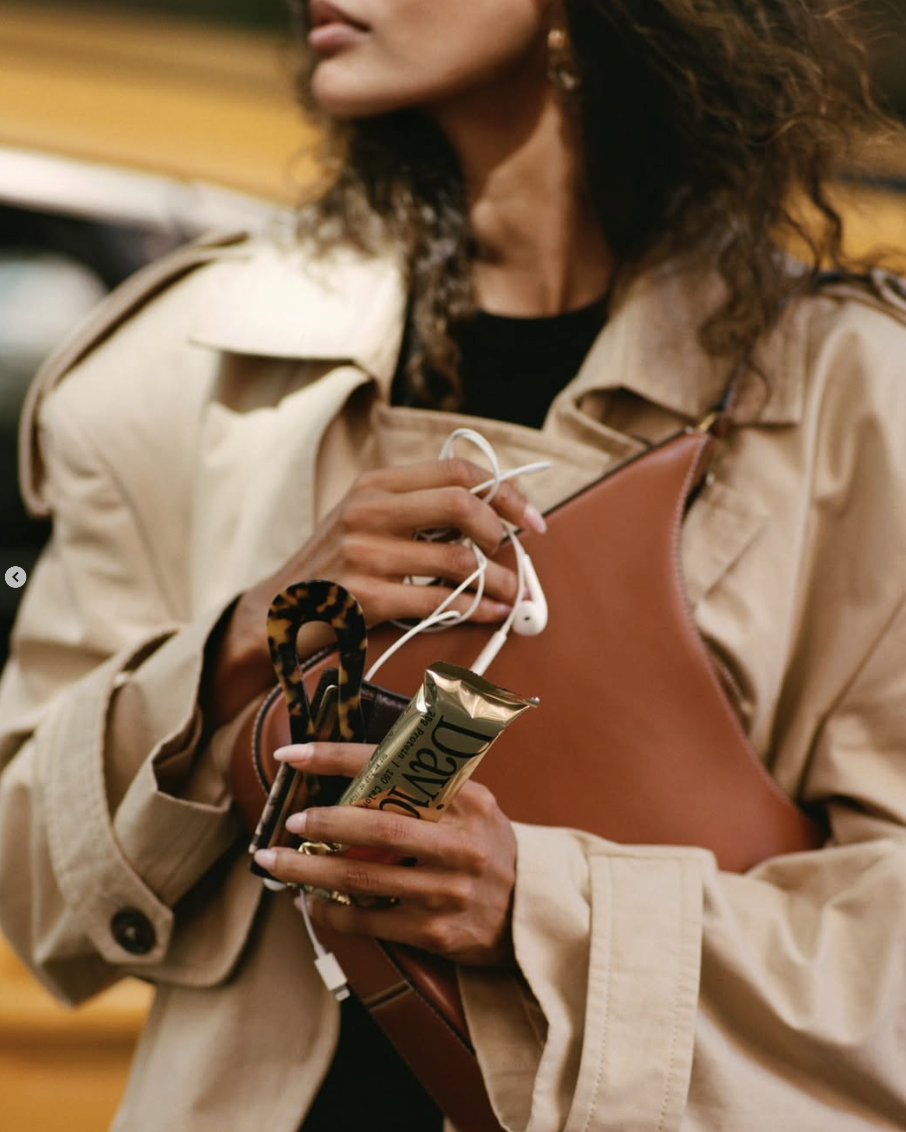 Moving like the Skims of protein bars.
What David is attempting is genuinely interesting: treating a protein bar like a fashion brand, with all the cultural strategy and aesthetic intentionality that implies.
The question is whether they can hold the positioning, luxury, aspirational, female-coded, without losing the thing that makes a protein bar worth buying in the first place.
Because fashion is seasonal. Nutrition is not.


